.avif)
Commercial Drone Insurance Canada: Coverage by Use Case, Risk, and Operator Type
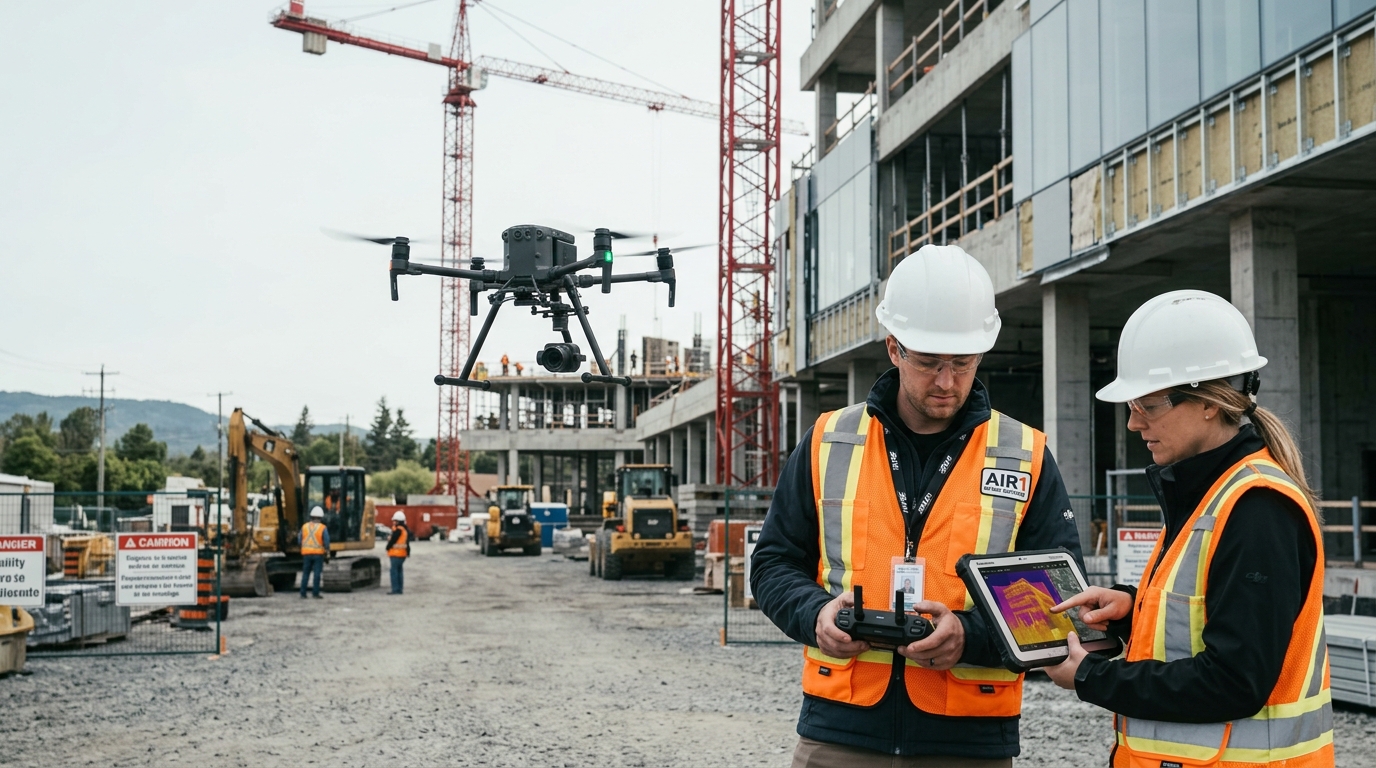
A drone job can look simple on paper: one pilot, one aircraft, one site, one flight window. Then the client asks for proof of insurance, the site manager wants to be added to the certificate, and the pilot realizes the drone is carrying a thermal camera worth more than the airframe.
That is usually when commercial drone insurance Canada questions get serious.
For UAV pilots, media crews, construction firms, surveyors, agricultural operators, and inspection teams, the right policy is not only about owning a drone. It is about what the drone does, where it flies, who hired the operator, what equipment is attached, and what could go wrong if the job is delayed or damage happens.
This guide explains how commercial drone insurance works in Canada by use case, risk, and operator type, so you can speak with a broker with the right details in hand.
Is commercial drone insurance required in Canada?
Transport Canada says insurance is not required for standard drone operation categories, but it is recommended. The same federal drone guidance also says proof of insurance may be required for some SFOC-RPAS operations, which can apply when a flight falls outside Basic, Advanced, or Level 1 Complex rules.
That difference matters.
A real estate photographer flying a registered sub-25 kg drone in a routine setting may not face the same insurance rule as a foreign operator, a company flying near an advertised event, or a crew planning certain BVLOS work. Transport Canada lists several situations where special permission may be needed, including operations above 122 m / 400 ft, drones over 150 kg, hazardous payloads, advertised events, and some flights beyond visual line of sight.
Insurance also becomes a business requirement even when it is not a federal baseline requirement. A municipality, film permit office, construction site, property manager, or utility company may ask for a certificate of insurance before the first flight. Many contracts ask for $2 million or $5 million in liability coverage, and some require the client to be named as an additional insured.
If you are unsure where your operation fits, start with UAV insurance guidance before you quote a job or sign a contract.
What commercial drone insurance usually covers
Commercial drone insurance is built around the losses a regular business policy may not handle well. Transport Canada notes that most standard home insurance policies do not cover drone use, and business policies can also contain aircraft-related exclusions.
A drone policy may include several parts:
- Third-party liability if your drone injures someone or damages property
- Hull or equipment coverage for the drone itself
- Payload coverage for cameras, LiDAR units, thermal sensors, or other attached gear
- Ground equipment coverage for controllers, cases, batteries, chargers, and tablets
- Premises or operations liability, depending on the business setup
- Professional liability or errors coverage for some inspection, mapping, or data work
- Non-owned or rented drone coverage if the operator uses borrowed equipment
The mix depends on how the drone is used. A wedding videographer with two quadcopters and cameras has a different exposure than a utility inspection crew flying near transmission lines or a survey company delivering data that a contractor may use for site decisions.
This is why a price-only quote can miss the point. The question is not “How much is drone insurance?” The better question is: “What loss would stop this business from completing paid work?”
Drone photography and videography insurance
Drone photography insurance is often bought by real estate photographers, wedding videographers, tourism content teams, and production crews. The flights may be short, but the sites can be busy: waterfront homes, condo towers, resorts, outdoor weddings, ski towns, and urban neighbourhoods with tight launch areas.
For this operator type, liability coverage is usually the starting point. A flyaway, battery issue, propeller strike, or hard landing can damage a parked vehicle, roof, window, sign, or nearby equipment. Payload coverage is also worth reviewing because a camera, gimbal, or lens may cost thousands of dollars.
Contracts matter here. A venue or production company may ask for proof of insurance before allowing takeoff. Film and event work can also involve permits, named insured wording, and strict operating windows. If weather delays the shoot, the pilot may still have contractual obligations to manage.
Before buying coverage, gather:
- Drone make, model, and serial number
- Camera and payload values
- Typical job locations and flight height
- Annual drone revenue
- Pilot certificate type and flight experience
- Client contract samples, if available
A broker can then review whether a basic liability setup is enough or whether the policy should address owned equipment, rented gear, and production-site requirements.
Construction, inspection, and infrastructure drone insurance
Construction and inspection work often carries higher third-party expectations because the drone operates around people, vehicles, cranes, rooftops, active job sites, or infrastructure. A construction company may use UAVs for progress photos. An engineering firm may inspect bridges, towers, tanks, or roofs. A utility contractor may fly near lines or substations.
The operational risk is different from a quick residential photo shoot.
Transport Canada’s urban airflow guidance gives a useful example: wind speed can increase up to double the upstream wind between buildings, and urban turbulence can be four times more severe than open-country free-atmosphere turbulence. In plain terms, a drone that feels steady in a field may behave very differently between buildings or near a rooftop edge.
For inspection operators, liability limits often need to match the contract. A project owner may ask for $2 million or $5 million in liability coverage, plus a certificate issued quickly with the correct business names. If the drone carries thermal, zoom, gas detection, or LiDAR equipment, payload scheduling becomes important too.
Inspection work may also create a data problem. If the drone operator misses a roof defect, mislabels a thermal reading, or delivers incomplete site data, the client’s loss may not be simple property damage. That is when professional liability should be discussed alongside UAV liability.
Air1 can help connect the drone exposure with broader aviation insurance and business insurance needs, especially when UAV work is one part of a larger operation.
Agriculture, mapping, and surveying drone insurance
Agricultural, mapping, and surveying drone work can involve wide areas, long days, expensive sensors, and data that guides real business decisions. Innovation, Science and Economic Development Canada lists RPAS uses across precision agriculture, infrastructure and environmental monitoring, logistics, and search and rescue. It also notes agricultural use cases such as aerial surveys to monitor crop health and identify areas needing attention.
On a farm, the liability setting may feel less crowded than a city job. The equipment exposure may be higher. Multispectral cameras, RTK units, mapping software, and batteries can represent a large investment, and the drone may travel between sites in a truck for weeks at a time.
For survey and mapping operators, the insurance review should include both physical and work-product risks:
- Damage to the drone, payload, controller, or ground station
- Theft from a truck, trailer, hotel, or job site
- Property damage during takeoff, landing, or low-level flight
- Contract requirements from landowners, developers, or agencies
- Data errors, missed areas, or late deliverables
A policy that works for casual aerial photography may not be enough for a mapping company delivering files that another professional will use for planning, measurement, or construction decisions.
BVLOS, SFOC, and higher-risk drone operations
Some operators are no longer doing simple visual-line-of-sight work. They may be testing BVLOS routes, working near restricted areas, carrying unusual payloads, supporting emergency operations, or planning flights that require special permission.
Transport Canada’s SFOC-RPAS page lists examples that may require permission, including certain BVLOS operations, foreign operators, advertised events, hazardous payloads, drones over 150 kg, and flights above 122 m / 400 ft. These operations deserve an insurance review before the application or client proposal is finalized.
Higher-risk drone work may require more detailed underwriting. Be ready to discuss:
- Operating manuals and safety procedures
- Pilot certificates and crew training
- Detect-and-avoid procedures, if applicable
- Maintenance records
- Flight areas, airspace, and launch sites
- Payload type and value
- Emergency procedures and incident history
Transport Canada also states that commercial users can face fines up to $25,000 for flying an unregistered drone. Drones weighing 250 g or more must be registered and marked, and pilots must carry the right certificate for the operation. Those compliance details do not replace insurance, but they help underwriters understand that the business runs a disciplined operation.
How much does drone insurance cost in Canada?
Drone insurance cost in Canada depends on the operator, not just the aircraft. Two businesses can fly the same drone model and need very different coverage.
Cost factors usually include:
- Type of work: photography, surveying, inspections, agriculture, film, training, or industrial use
- Flight environment: rural fields, cities, job sites, airports, waterfronts, or restricted areas
- Drone and payload value
- Annual drone revenue
- Pilot experience and certificates
- Claims history
- Requested liability limit
- Contract wording and additional insured requirements
- Whether coverage is annual, monthly, or project-based
Public broker and insurer pages show the range. Zensurance says drone insurance packages generally start around $500 per year with a $1 million coverage limit. SkyWatch lists Canadian plans from $44 CAD per month and $466 CAD per year. Front Row notes that common liability limits include $2 million and $5 million, depending on the project and contract.
Those figures are useful reference points, not a promise. A low-risk photographer and a company doing industrial inspection near active facilities should not expect the same quote.
What to prepare before requesting a UAV insurance quote
The fastest quote conversations happen when the operator has the right details ready. A broker cannot properly review UAV liability insurance if the use case is described only as “commercial drone work.”
Prepare this information before you start your quote:
- Legal business name and operating name
- Province or territory of operation
- Drone make, model, weight, serial number, and value
- Payload values, including cameras and sensors
- Pilot names, certificates, and experience
- Types of work performed and annual drone revenue
- Typical flight locations and any higher-risk settings
- Whether you rent, borrow, or lease drones
- Contract samples showing insurance requirements
- Past claims, incidents, or Transport Canada enforcement issues
If a client has already sent insurance wording, share it early. The difference between $1 million, $2 million, and $5 million in liability can affect price, market access, and whether the certificate can be issued the way the client expects.
FAQ: commercial drone insurance in Canada
Do I need drone insurance for commercial work in Canada?
Transport Canada says insurance is not required for standard operation categories, but it is recommended. Some SFOC-RPAS operations may require proof of insurance, and many clients require it by contract.
Does regular business insurance cover drone work?
Not always. Many policies contain aircraft exclusions or do not cover drone hull, payload, or aviation-related liability. Ask a broker to review the wording before assuming your current business policy applies.
What limit should a commercial drone operator carry?
It depends on the job, client contract, location, and risk. Many commercial contracts ask for $2 million or $5 million in liability coverage, while smaller jobs may ask for less. The contract should be reviewed before the policy is bound.
Can I insure cameras, sensors, and other payloads?
Often, yes. Payload coverage should be discussed when the drone carries cameras, thermal sensors, LiDAR units, mapping equipment, or other gear that would be costly to replace.
What is the difference between drone liability and drone hull coverage?
Drone liability covers injury or property damage claims made by others. Hull coverage is for physical damage to the drone itself, subject to policy wording, deductibles, and exclusions.
Talk to an aviation insurance advisor before the next contract
Commercial drone insurance in Canada should match the work, not just the aircraft. A single operator filming cottages in BC, a survey crew mapping a construction site, and an inspection company flying near industrial assets all face different insurance questions.
Air1 Insurance helps UAV operators review coverage options, contract wording, liability limits, payload values, and quote requirements in plain English. If a client has asked for proof of insurance, or if your drone work has moved beyond occasional jobs, request a custom insurance quote before the next flight window.