
Drone Licence in Canada: Basic vs Advanced Pilot Certificate, Exam and What It Means for Insurance
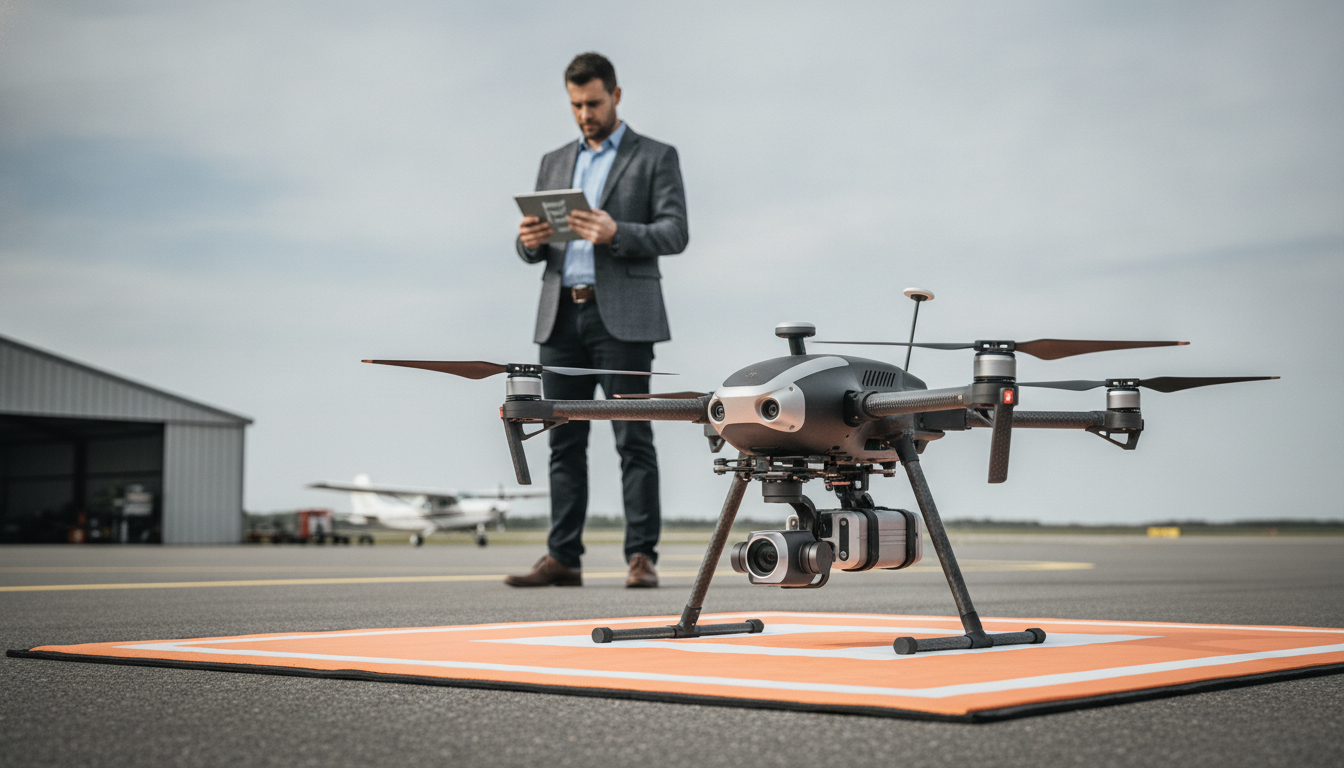
This is general information, not legal or insurance advice. Rules change, so confirm the current requirements with Transport Canada before you fly.
Quick answer: Canada does not issue a single "drone licence". Transport Canada issues drone pilot certificates, and pilots of drones weighing 250 grams up to and including 150 kg must hold one. The Basic certificate (age 14) covers simpler flying, the Advanced certificate (age 16) adds flying closer to people and in controlled airspace, and Level 1 Complex (age 18) adds beyond-line-of-sight work. Drones under 250 grams need no certificate. Insurance is separate, and it often comes up the moment you work for a client.
Licence or certificate?
Most people search for a "drone licence" or "drone license", and Transport Canada's own term is pilot certificate. In practice they mean the same thing: proof that you passed the knowledge requirements for the kind of flying you plan to do.
Two details from Transport Canada's pilot certificate page are worth knowing before you start. You must carry a valid certificate while you fly, and it has to be a printed or electronic document issued by Transport Canada, because no other form is accepted. The certificate itself does not expire, although pilots are expected to keep their skills up to date.
Which certificate do you need?
Transport Canada's operation categories page sets out what each certificate allows. Drones are grouped by weight: microdrones under 250 g, small drones from 250 g to 25 kg, medium drones over 25 kg up to 150 kg, and large drones over 150 kg (special operations only).
BasicAdvancedLevel 1 ComplexMinimum age141618Small drones, visual line of sightYesYesYesCloser to or over peopleNoYes*Yes*Medium dronesNoYes*Yes*Controlled airspace (with permission)NoYes*Yes*Sheltered operationsNoYesYesExtended visual line of sightNoYesYesBeyond visual line of sightNoNoYes*
*The drone must meet the safety feature requirements for that operation.
If you only fly a small drone in open, uncontrolled airspace and away from people, Basic is the natural starting point. If you want to film events, work near buildings or fly in controlled airspace near an airport, you are looking at Advanced. Where you may actually fly is a separate question, covered in our guide to drone rules in Canada.
Getting the Basic certificate
The Basic certificate comes from one online test, the Small Basic Exam. According to Transport Canada's Small Basic exam page:
- You must be at least 14.
- The exam has 35 multiple-choice questions and a 90-minute time limit.
- The pass mark is 65%.
- If you fail, you wait 24 hours before trying again, and no limit on retakes is stated.
- The certificate is issued after you pass.
Transport Canada publishes the knowledge requirements for basic and advanced pilots (document TP 15263), which lists what the exams can test. The exam fee is shown on the exam page, so check it before you book rather than relying on a figure from a blog.
Getting the Advanced certificate
The Advanced certificate has more steps. Per Transport Canada's flight review page, you need two knowledge requirements plus an application:
- Pass the Advanced Exam online. The minimum age for the Advanced certificate is 16.
- Complete a flight review with a Transport Canada-approved flight reviewer, who is associated with a drone flight school. Bring your drone's Certificate of Registration. The reviewer assesses the skills listed in TP 15263.
- Apply for the certificate. Transport Canada's pages say the application fee is paid when you apply, and that reviewers set their own price for the flight review.
If you fail the flight review, you can retake it the next day with no limit on attempts, though a fee may apply each time. Results are submitted within 24 hours of passing. If your knowledge lapses for more than two years, the results may be invalidated.
What about Level 1 Complex?
Level 1 Complex is the top tier and is aimed at beyond-line-of-sight work. Transport Canada's 2025 summary of changes says applicants must be 18, pass the Advanced and Level 1 Complex exams, complete at least 20 hours of ground school and pass a flight review. It lists the Level 1 Complex exam at $50 and the certificate at $125. Operators doing beyond-line-of-sight work also need an RPAS Operator Certificate. Many pilots will not need this level.
Do you need a licence for a drone under 250 grams?
No. Transport Canada says microdrones under 250 g need no registration, marking or pilot certificate, but the microdrone rules still apply. Flying near an advertised event, such as an outdoor concert, needs a Special Flight Operations Certificate even for a microdrone.
Registration is a different step
A certificate proves you can fly. Registration identifies the drone. Drones of 250 g and over must be registered and marked, and the registration fee rose to $10 on April 1, 2025. Our guide to drone registration, rules and insurance in Canada walks through that side, including when to review insurance after you register.
Insurance once you are certified
Getting certified does not give you insurance, and Transport Canada does not require it for standard flying. Its safety page says insurance is recommended but not required for standard categories, and that proof may be required for operations needing a Special Flight Operations Certificate.
In practice, insurance usually becomes the requirement because someone else asks for it. Air1's UAV insurance page notes that client shoots may require proof of insurance before you fly, and that events and productions often have strict contract requirements. A certified pilot with a drone and no policy can still face a liability claim if the drone damages property or injures someone.
When you ask for a quote, expect to provide your drone model and serial number, payload details, intended use, pilot information, operating area and any client insurance requirements. It is sensible to mention which certificate you hold and what you plan to do with it, and to ask whether it affects eligibility or terms. For a fuller picture, see our guides on drone liability insurance and commercial drone insurance.
A simple order of steps
- Work out the flying you want to do, and pick Basic or Advanced from the table above.
- Check you meet the minimum age: 14, 16 or 18.
- Study Transport Canada's knowledge requirements, then book the online exam.
- For Advanced, book a flight review with an approved reviewer once you pass.
- Register and mark your drone if it is 250 g or more.
- Carry your certificate on every flight, and talk to an advisor about insurance before your first paid job.
FAQ
Do I need a licence to fly a drone in Canada? You need a pilot certificate to fly a drone from 250 g up to 150 kg. Drones under 250 g need no certificate, though the microdrone rules still apply.
How old do you have to be to get a drone licence in Canada? Transport Canada lists 14 for Basic, 16 for Advanced and 18 for Level 1 Complex. Unlicensed people may fly only under the supervision of a certified pilot.
How much does a drone licence cost in Canada? It depends on the certificate. The exam and application fees are listed on Transport Canada's pages, and flight reviewers set their own price for the Advanced review. Transport Canada lists the Level 1 Complex exam at $50 and its certificate at $125.
Does a drone pilot certificate expire? No. Transport Canada says certificates do not expire, but pilots must keep their skills current.
What is the difference between a drone licence and drone registration? The certificate is for the pilot and registration is for the aircraft. Drones of 250 g and over need both.
Do I need insurance to fly a drone in Canada? Transport Canada does not require insurance for standard categories, but it recommends it, and clients, venues and some special operations often ask for proof. Our UAV insurance page explains the coverage options.
If you are about to fly for a client or an event, Air1's UAV insurance options are a good place to start, and you can request a quote to talk through liability limits and proof of insurance with an advisor.