
Flight Training School Insurance in Canada: What Operators Need to Know
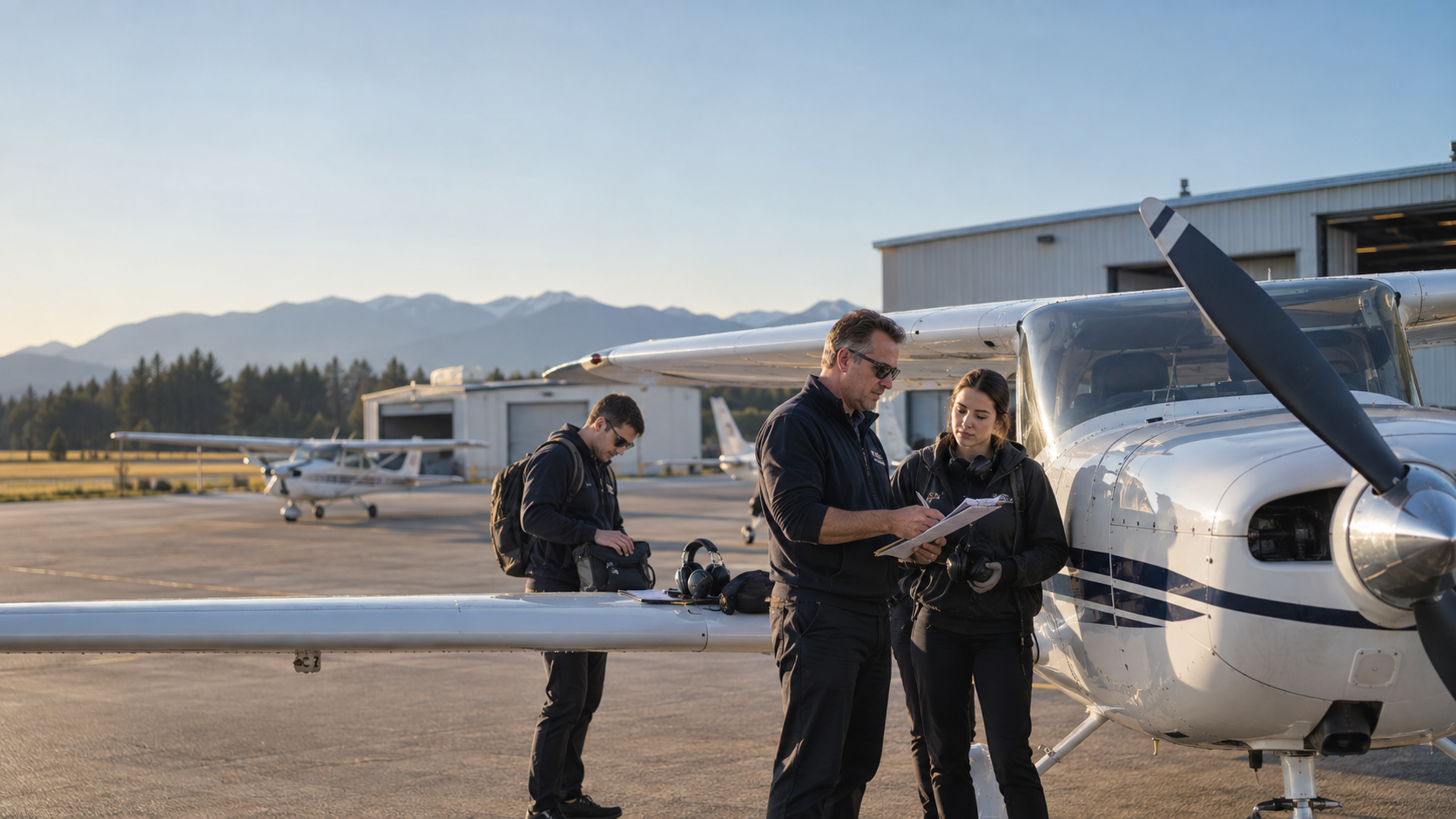
Running a flight school means putting aircraft, instructors, and student pilots into the same daily equation — solo practice, dual instruction, rental to certificated pilots, and sometimes club or co-ownership arrangements layered on top. That combination carries a different risk profile than either personal aviation ownership or a typical commercial charter operation, and the coverage should reflect it.
Why a flight school's exposure is different
A training aircraft is flown far more often, by far more different pilots, than almost any other category of aircraft. Over a single aircraft's life at a busy school, it might be flown by dozens of student pilots at every stage of training, plus instructors, plus occasionally rented to certificated pilots outside of lessons. Each of those categories carries a different underwriting profile:
- Dual-instruction flights, where an instructor is aboard and responsible for the flight
- Solo student flights, where a student pilot is flying alone under the school's authorization
- Aircraft rental to licensed pilots outside of formal instruction
- Check rides and proficiency flights, which Air1's own aviation liability application list separately names as "Pilot Proficiency Check"
A personal-use aviation policy isn't built to underwrite that range of pilot experience and flight purpose on a single aircraft — which is exactly why flight training is named as its own audience under commercial aviation insurance. It's also why flight training operates under its own regulatory category: a flight training unit generally needs a Flight Training Unit Operator Certificate under Canadian Aviation Regulations Subpart 406, distinct from the certification that applies to charter or air taxi operations.1
What to review as a training operation
Instructor and student liability exposure. Dual-instruction and solo-flight exposure carry different risk profiles, and a policy built for one doesn't automatically extend to the other — this is worth confirming explicitly rather than assuming.
Aircraft use across multiple pilots. Named-pilot policies work differently than open-pilot warranties, and a training fleet with rotating students and instructors usually needs the latter, or a structure built specifically for that turnover.
Non-owned or leased training aircraft. Schools that lease aircraft, or that allow students to train in aircraft the school doesn't own, should review non-owned and hired aircraft liability as part of their commercial coverage — the same category that applies to charter and corporate fleet operations.
Ground operations and hangar exposure. If the school operates from its own hangar or maintains training aircraft on-site, that's a separate consideration from flight operations — see hangar insurance and hangarkeepers liability if third-party aircraft are ever stored or handled.
Contractual requirements. Airport operating agreements, aircraft leases, and insurance requirements tied to a training curriculum or aviation program partnership often specify minimum coverage — confirm these before they become a gap.
Questions worth asking when reviewing a training operation's policy
A flight school's insurance review benefits from going beyond "are we covered" to specifics that match how the school actually operates:
- Does the policy distinguish between dual-instruction and solo-student flights, or treat them the same? These carry different risk profiles, and confirming how the policy actually handles the distinction avoids assumptions being tested for the first time during a claim.
- How does the policy handle a student who is between certifications — past initial solo but not yet fully licensed? This transitional stage is common at a busy school and worth clarifying explicitly.
- Are check rides, proficiency flights, and rental-to-graduates all captured, or only formal instruction? Air1's own aviation liability application separately lists a Pilot Proficiency Check category for exactly this reason — it's not automatically bundled into every commercial aviation policy by default.
- What happens if a leased or non-owned training aircraft is involved in an incident? Confirm whether non-owned and hired aircraft liability responds the same way owned-aircraft coverage does, since schools frequently operate a mix of both.
- Does the policy reflect current contractual requirements — airport operating agreements, aircraft leases, or aviation-program partnerships — or was it last reviewed before those relationships were in place?
Working with an advisor who understands training operations
Flight training is a narrower niche than general aviation insurance, and the underwriting questions reflect that — instructor qualifications, student-pilot turnover, dual vs. solo exposure, and non-owned aircraft all shape how a policy should be structured. Reviewing coverage with an advisor familiar with training operations, rather than treating it as a standard commercial aviation policy, is worth the extra step before binding coverage or renewing.
How this differs from insuring a personal aircraft
An individual pilot renting or borrowing aircraft has their own coverage question, covered in Air1's guide to pilot insurance for non-owned and rented aircraft. A flight school sits on the other side of that relationship — it's the operation whose aircraft are being flown by renters, students, and instructors, which is a business-level underwriting question, not a personal one. The two are related but distinct, and a school shouldn't assume its exposure is covered just because individual renter pilots are expected to carry their own coverage.
FAQ
Does commercial aviation insurance for a flight school cover both instructors and students?
Coverage can be structured for dual-instruction and solo-flight exposure, but the specifics depend on how the policy is written — this should be confirmed explicitly rather than assumed from a general commercial policy.
What if my flight school leases its training aircraft instead of owning them?
Non-owned and hired aircraft liability is a named category under commercial aviation coverage and applies directly to leased training fleets — review it as part of your application.
Do I need separate coverage for check rides and proficiency flights?
These are commonly covered under the same commercial aviation policy as instruction flights, but confirm the specific activities covered when applying — Air1's application list separately names a Pilot Proficiency Check form for exactly this reason.
Is flight school insurance different from insuring a single training aircraft privately?
Yes — a training operation with multiple pilots, students, and instructors using the same aircraft carries a different exposure profile than a single owner flying their own aircraft, which is why flight training is underwritten as a commercial activity.
How does coverage handle a student who has soloed but isn't fully licensed yet?
This transitional stage is common at busy schools and is worth confirming explicitly with your policy rather than assuming it falls under either the dual-instruction or fully-licensed categories by default.
Does our policy need updating if we add a new leased aircraft to the training fleet?
Yes — non-owned and hired aircraft liability should be reviewed whenever the fleet composition changes, since a policy scoped to previously owned aircraft may not automatically extend to newly leased equipment.
Should a flight school work with a general commercial insurance broker or one that specializes in aviation?
Flight training carries underwriting considerations — dual vs. solo exposure, student turnover, non-owned aircraft — that a broker familiar with training operations specifically is better positioned to structure correctly.