.avif)
Hangarkeepers Liability Insurance in Canada: A Plain-English Guide for Hangar Owners
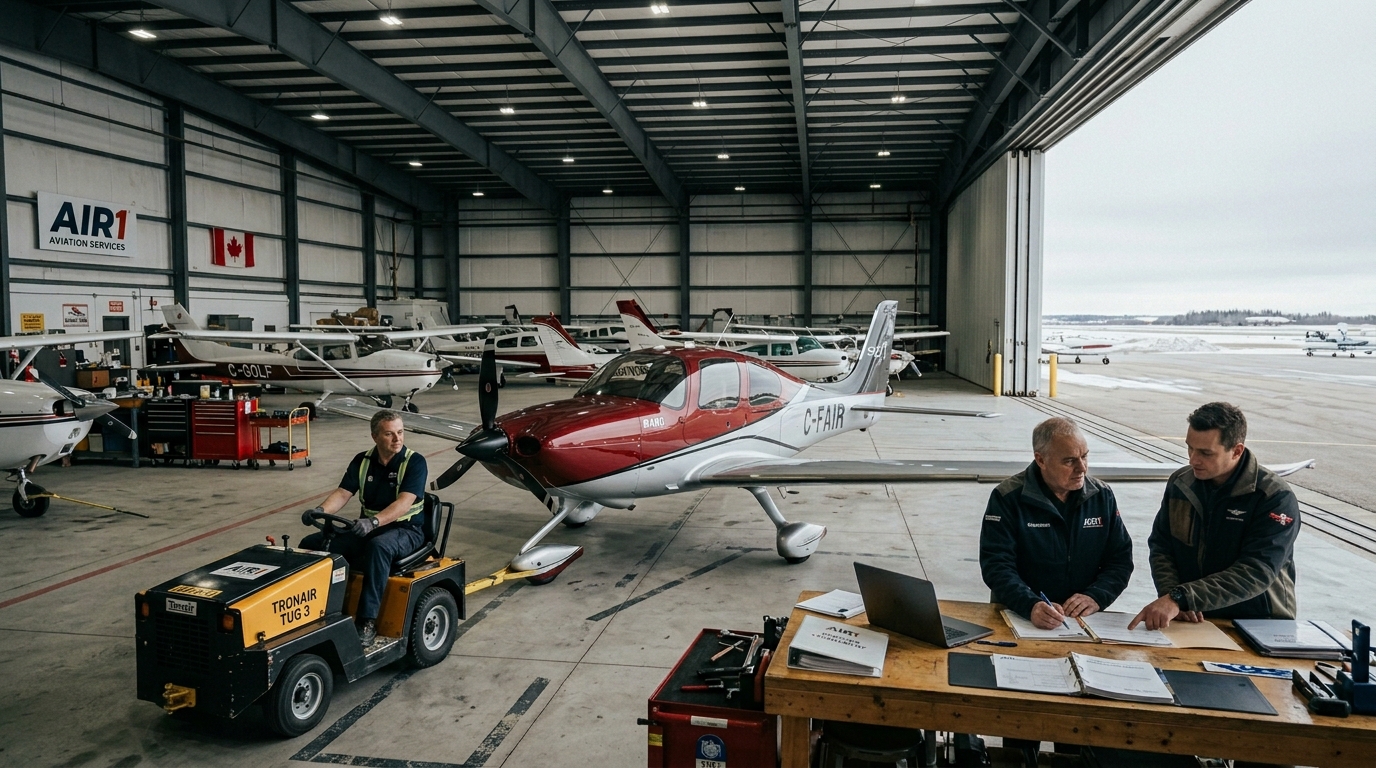
A hangar is more than a building with aircraft inside. It is a place where other people’s aircraft may be parked, moved, cleaned, fuelled, inspected, repaired, or simply waiting out Canadian weather.
If one of those aircraft is damaged while it is under your control, a standard property policy may not answer the claim the way you expect.
That is where hangarkeepers liability insurance Canada discussions usually begin: not with the walls and roof, but with aircraft you do not own. For Canadian hangar owners, airport tenants, flying clubs, maintenance shops, FBOs, and private operators who store third-party aircraft, the key question is simple: who is financially responsible if a customer’s aircraft is damaged while it is in your hangar or on your ramp space?
This guide explains hangar keepers liability insurance in plain English, including care, custody, and control, lease requirements, common loss scenarios, cost factors, and the information underwriters usually ask for before quoting.
What hangarkeepers liability insurance covers
Hangarkeepers liability insurance responds to your legal liability for damage to non-owned aircraft while those aircraft are in your care, custody, or control. AssuredPartners gives the same plain-language framing: hangarkeepers liability covers legal liability for damage to a non-owned aircraft in the insured’s care, custody, or control.
That wording matters. If a visiting aircraft is parked in your hangar for the weekend and a door system failure damages the wing, the claim is not only about the hangar building. It is about the aircraft owner’s loss and whether your operation is legally responsible.
Typical situations that may create hangarkeepers exposure include:
- Storing a tenant’s aircraft inside your hangar
- Moving a customer aircraft with a tug
- Repositioning aircraft to make room for another arrival
- Allowing staff or contractors to access the hangar
- Performing light ground handling, cleaning, or staging
- Keeping aircraft keys or access authority
This is different from aircraft hangar insurance for the building itself. Building coverage is concerned with your structure and owned property. Hangarkeepers liability is concerned with aircraft owned by someone else.
Care, custody, and control aircraft: what it means in real hangar operations
Care, custody, and control means an aircraft is not merely near your premises; it is under your responsibility in some practical way.
Think about a small airport in BC. A Cessna 182 owner leaves the aircraft in your hangar while travelling for two weeks. You have the keys, your staff move it twice to access another aircraft, and a battery tender is connected. If a tow bar mistake damages the nose gear, the aircraft was not just sitting nearby. It was in your control.
The same logic can apply when the aircraft is outside the hangar. If your business moves a customer aircraft from the ramp into storage and a wingtip clips a door frame, the damage may still sit inside the care, custody, and control aircraft conversation.
The line is not always obvious. Underwriters will usually ask how aircraft are accepted, who can move them, how movements are documented, and whether any maintenance or ground handling takes place. A broker who understands aviation can help separate general premises liability from the more specific hangarkeepers exposure.
Owned hangars, leased hangars, and airport tenant requirements
A privately owned hangar on deeded land, a leased hangar bay, and a land lease at a municipal airport can all create different insurance obligations. The lease is often the first document to review.
Canadian airport lease agreements commonly require tenants to carry commercial general liability, insure activities on the premises, provide certificates of insurance, and name the airport authority or municipality as an additional insured. A Campbell River Airport land lease template, for example, refers to commercial general liability covering the tenant’s use and occupation of the premises and activities connected with it.
That lease wording may not automatically mean hangarkeepers coverage is included. It may only set a minimum liability requirement for premises use. If your operation stores or handles third-party aircraft, the lease requirement and the aircraft exposure should be reviewed together.
If you own the hangar building
You may need property coverage for the structure, contents, tools, equipment, improvements, and lost rental income after a covered loss. If other people’s aircraft are stored inside, hangarkeepers liability should be reviewed separately.
If you lease the hangar or land
Your agreement may require specific limits, waiver wording, additional insured status, proof of insurance, or approval before subleasing space. It may also restrict stored materials, fuel, or maintenance activity.
If you rent space to aircraft owners
You may have exposure even without maintenance work. If you control access, assign parking locations, move aircraft, or manage who enters the hangar, the aircraft owner may look to you after a loss.
Before you request aviation insurance guidance, have your lease, rental agreements, and hangar-use rules ready. Those documents often shape the quote.
Common hangar loss scenarios in Canada
Hangar claims usually start with a physical event: fire, wind, snow load, water intrusion, a tow incident, or a simple human mistake.
Statistics Canada reported 150.7 million enplaned and deplaned passengers at Canadian airports in 2023, up 26.8% from 2022. Larger passenger airports are only one part of the story, but the number shows the scale of aviation activity in Canada. Smaller airports, flight schools, private hangars, and maintenance spaces all sit inside the same broader operating environment.
For hangar owners and operators, the risks often include fire from heaters or chargers, wind-driven door damage, snow load, roof leaks, tow incidents, contractor damage, theft, vandalism, or unauthorized access.
A common scenario: three aircraft are stored wingtip-to-wingtip for winter. One needs to be moved for an annual inspection slot. A staff member pulls it forward in low light and clips another aircraft’s elevator. The visible damage may look small, but repair costs, parts delays, loss of use, and owner expectations can turn it into a serious claim.
This is why underwriters care about procedures. The best quote file does not only state the building size. It explains who moves aircraft, how often, where keys are kept, how spaces are assigned, and what rules apply after hours.
Aircraft hangar insurance cost: what affects pricing
Aircraft hangar insurance cost depends on both the building exposure and the liability exposure. A small private hangar used for one owner’s aircraft is not priced the same way as a multi-tenant facility with customer aircraft, maintenance activity, and frequent ground movement.
Insurers usually look at construction type, hangar age, square footage, fire protection, airport location, weather exposure, aircraft values, movement procedures, maintenance activity, security, access control, prior losses, and the maximum value of any one aircraft in your care.
Transport Canada’s Canadian Aviation Regulations show why limit discussions need care. Section 606.02 sets public liability insurance minimums for many aircraft operators based on aircraft weight and operation type, including $100,000 to $3,000,000 for many non-commercial aircraft owners and higher public liability amounts for certain operators.
The Canadian Transportation Agency also publishes liability tables for licensed air services, including $595,000 per passenger seat and public liability starting at $1,985,000 for aircraft under 7,500 pounds. Those aircraft operator limits are not the same as hangarkeepers limits, but they show why aviation liability should not be guessed at.
If you are comparing hangar insurance Canada options, avoid judging the quote only by premium. A lower price may come with a lower aircraft-in-care limit, a narrow description of operations, or exclusions that do not fit how your hangar is actually used.
What information underwriters ask for
A good submission makes the underwriter’s job easier. It also helps reduce back-and-forth when you are trying to meet a lease deadline or renew before winter storage begins.
Before asking for a hangar insurance quote, gather the legal name, airport address, lease status, hangar construction details, current insurance requirements, operation type, number of stored aircraft, estimated aircraft values, highest-value aircraft in your care, movement procedures, written hangar rules, prior claims, and requested limits.
If your operation changes during the year, tell your broker. Adding winter storage for outside aircraft, allowing a mechanic to use the space, or starting short-term hangar rentals can change the risk profile.
How to reduce hangarkeepers exposure before a claim
Insurance is only one part of the plan. Daily operating habits often decide whether a minor event stays minor.
Start with clear written rules. State who may move aircraft, whether keys may be left in the hangar, where tow bars are stored, who has after-hours access, and what happens when a visiting aircraft arrives. For shared hangars, mark parking spots and keep enough clearance around wingtips, propellers, doors, and support posts.
Then document aircraft condition. A quick intake photo set can help if there is later disagreement about whether a scratch, dent, cracked fairing, or spinner mark happened before storage.
Finally, keep lease and insurance paperwork aligned. If your airport authority requires proof of insurance by a certain date, do not wait until renewal week. If your lease names specific insured parties or limit amounts, your certificate must match the wording.
FAQ: hangar keepers liability insurance
Is hangarkeepers liability the same as hangar insurance?
No. Hangar insurance often refers to the building, owned contents, premises liability, and related property coverage. Hangarkeepers liability addresses your legal liability for damage to aircraft you do not own while they are in your care, custody, or control.
Do I need hangarkeepers liability if I only store aircraft?
Possibly. Storage alone can create exposure if you control access, assign spaces, move aircraft, or accept responsibility for the aircraft while it is on your premises. The answer depends on your lease, agreements, operations, and how much control you have.
How much hangarkeepers liability limit should I carry?
There is no single limit for every hangar. A useful starting point is the highest value of non-owned aircraft in your care at one time, then reviewing lease requirements, aircraft mix, movement procedures, and worst-case scenarios with an aviation insurance broker.
Speak with Air1 before you renew or sign a lease
Hangarkeepers liability insurance is not a box to tick after the lease is signed. It should be reviewed before you accept third-party aircraft, expand storage, let others use the hangar, or change how aircraft are moved.
Air1 Insurance works with Canadian aviation clients who need clear advice on hangars, aircraft, pilots, and aviation business risks. If you own, lease, or manage a hangar, speak with Air1 about your building, lease requirements, aircraft-in-care exposure, and quote options.
Start with Air1’s hangar insurance service, review broader aviation insurance options, or request a quote when you are ready to compare coverage.