.avif)
What to Do After a Commercial Fire: BC Business Claim Checklist
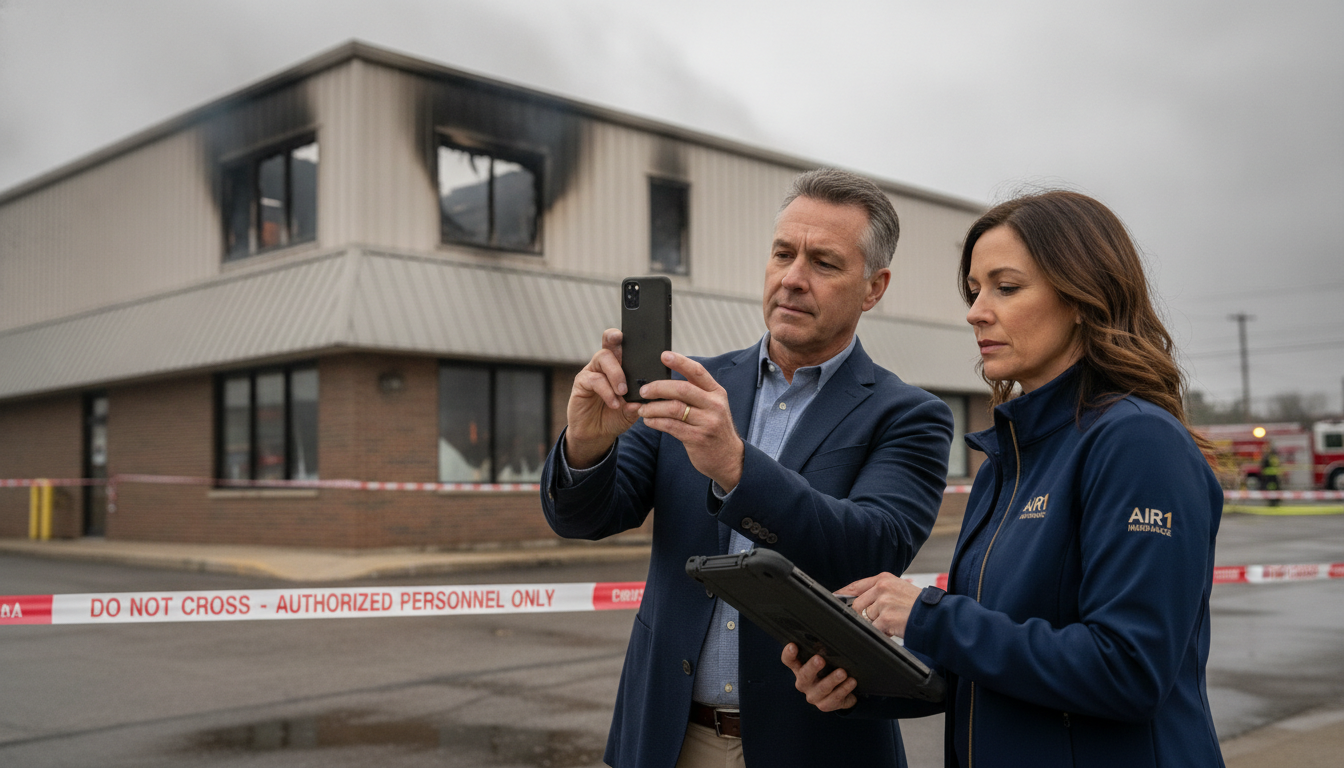
A commercial fire can leave an owner facing staff questions, a closed building and damaged stock at the same time. Start with safety: call 9-1-1 for an active fire or immediate danger, keep everyone away from the site, and do not re-enter until the responsible authority says it is safe. Then follow the directions of your insurer or adjuster.
The first decision is whether the site is safe
Smoke may have cleared while electrical, structural, chemical or water hazards remain. Even a visible undamaged office is off-limits without permission.
PreparedBC's current disaster recovery guidance says to stay out of damaged buildings and return only when authorities say it is safe. The City of Burnaby's fire-services page says 9-1-1 is for fire, police or medical emergencies that require immediate action. Those sources provide a BC-wide recovery boundary and one municipal example; the fire department or authority responsible for your incident controls access at your location.
From a safe place:
- account for employees, customers and contractors;
- tell 9-1-1 about any known hazardous materials, fuel, compressed gases or missing person;
- follow evacuation, road-closure and site-control directions;
- note the name and agency of the person giving re-entry instructions; and
- do not send an employee inside to “take a quick look.”
Start one call log while details are fresh
Use one notebook or shared file. Record the date, time, person, organization, contact details, purpose and next action for every call. Depending on the incident and your role in the property, the list may include:
- Your insurance representative or the claims number shown on the policy.
- The landlord or property manager if your business leases the premises.
- The building owner, strata manager or neighbouring tenant when the responsible authority directs contact.
- Utilities, security or alarm providers only when the authority, property owner, insurer or adjuster says contact is appropriate.
- A designated employee lead who can give staff one consistent update.
The Insurance Bureau of Canada business-claim guide says a business should contact its insurance representative and provide complete, accurate details as soon as possible after property damage. Ask for the claim number, adjuster's name, approved communication channel and the next action expected from you.
Preserve evidence without disturbing an unsafe scene
A burnt shelving unit may look like rubbish, yet the item, its label and the debris pattern may matter to the fire investigation or claim. Do not move, clean, repair or discard damaged property unless the authority or insurer says it is safe and appropriate.
You can begin evidence preservation from outside the restricted area:
- save security-camera footage before the system overwrites it;
- export alarm, access-control, point-of-sale and equipment logs;
- collect pre-loss inventory reports, purchase records and recent photos;
- photograph only from a public or authorized safe position; and
- write down what you personally observed, separating it from what someone else reported.
IBC advises businesses to keep damaged items unless they are dangerous or pose a health hazard, and to confirm with the insurer before disposal. If an emergency crew removes or destroys something for safety, record who directed the action, when it happened and any report number available.
First 24 hours checklist
Use this as a print-clean working list. The sequence may change when the authority, insurer or adjuster gives different directions.
- Confirm that people are accounted for and urgent medical needs are addressed.
- Record the authority's access restrictions. Do not enter without permission.
- Notify the insurance representative and record the claim number.
- Notify the landlord or property manager if the space is leased.
- Ask the insurer or adjuster what immediate steps are authorized to prevent further damage.
- Ask who may secure openings, extract water or isolate utilities.
- Preserve camera, alarm, access and system logs remotely where possible.
- Start a photo, inventory, expense and call log.
- Save all invoices and receipts connected to the loss.
- Give employees one contact person and a factual status update.
- Tell customers and suppliers only what is known about access, orders and service; do not promise a reopening date.
- Back up digital records to a secure location that authorized staff can reach.
IBC's guide asks businesses to list damaged, destroyed or stolen property and, where possible, attach purchase orders, invoices, receipts, manuals, warranties, police reports and photos. It also advises keeping cleanup receipts. These are claim inputs, not proof that an expense or item will be covered.
First 7 days checklist
The first week often shifts from emergency response to controlled inspection, documentation and operational decisions. A machine shop may be able to handle customer calls remotely while access to its equipment remains restricted.
- Confirm in writing who can enter, when and with what protective equipment.
- Walk the site only with authorized people and follow their safety instructions.
- Update the damaged-property inventory with make, model, serial number, quantity, age and estimated original cost where known.
- Match each item to a purchase record, supplier record, asset register or pre-loss photo when available.
- Separate ordinary operating costs from new loss-related expenses in the accounting system.
- Record cancelled orders, interrupted production, payroll changes and extra operating costs without assuming they are insured.
- Ask the adjuster before hiring restoration services, authorizing repairs or disposing of damaged material.
- Update staff, landlord, customers and key suppliers with confirmed facts and the next update time.
- Schedule the next claim-status call and list unanswered questions.
Build an inventory and document log the adjuster can follow
A useful inventory connects each item to evidence. Record an item number, description, location, quantity, make/model/serial number, purchase record, observed condition, photo file and any action directed by the authority or adjuster. Keep unedited originals and work from copies. Mark missing documents instead of silently estimating them.
Track extra expenses and interruption records separately
Suppose a Burnaby retailer rents temporary storage, pays overtime to move undamaged stock and loses access to its point-of-sale system. Those are different records with different supporting documents.
Create separate folders for:
- emergency protection and cleanup costs;
- temporary premises, storage, equipment or communications;
- payroll and overtime changes;
- shipping, supplier and customer-order changes;
- sales and production records before and after the fire;
- cancelled orders or contracts; and
- expenses avoided while the business was closed.
Keep invoices, receipts, agreements, bank records and notes explaining the business reason for each cost. Ask the adjuster which forms and accounting periods are required. Coverage for business interruption or extra expense depends on the policy, the cause of loss, limits, waiting periods, exclusions and the insurer's assessment. This checklist does not predict reimbursement.
Questions to ask the adjuster before work begins
Restoration decisions can move fast. Put questions in writing and keep the answers with the claim file.
- What access restrictions apply, and who confirms safe entry?
- What immediate protective work is authorized?
- Which damaged items must be retained for inspection?
- What can be moved, cleaned or discarded, and who must document it first?
- Which photos, inventories, financial statements and forms are required?
- How should urgent expenses be submitted?
- Is a proof-of-loss form required, and what policy deadline applies?
- How should estimates and repair scopes be approved?
- Who communicates with the landlord, building insurer and vendors?
- When is the next review, and what information is due before it?
IBC notes that an adjuster reviews the circumstances and documents and explains the next steps. It also says a proof-of-loss form may be requested. Use the deadline given for your claim rather than relying on a generic timeline.
Keep temporary operations realistic
A café cannot promise next-Monday reopening while health, fire and building approvals remain unknown. Give staff, customers and suppliers a factual status and next-update time. Before using temporary premises, check authority and landlord access, licensing, safety, privacy, equipment and employee needs. Do not assume the insurer approved the site or cost; get direction in writing.
Review coverage after urgent work is under control
The first job is recovery, not shopping for another policy. Once immediate actions and claim documentation are stable, review what the event exposed: out-of-date asset values, missing off-site backups, unclear call trees, weak vendor records or gaps between the lease and policy responsibilities.
Air1's commercial property insurance guide for BC businesses explains the pre-loss coverage questions without duplicating this claim checklist. For future policy clarity or help understanding a current business policy, review Air1's Business Insurance service or contact an Air1 advisor after the emergency steps are addressed.
Frequently asked questions
When can I re-enter after a commercial fire?
Only when the responsible authority says it is safe and any site-specific restrictions are met. Permission may be limited to certain people, areas or times. Follow the authority's and insurer's directions.
Should I photograph the damage immediately?
Only from a safe, authorized location. Do not enter a restricted building or move material to improve a photograph. Save remote camera footage and pre-loss records while you wait for access instructions.
Can I throw away burnt inventory?
Do not discard it without direction. IBC advises retaining damaged items unless they are dangerous or pose a health hazard and confirming with the insurer before disposal. Record any safety-directed disposal.
Which receipts should I keep?
Keep every loss-related receipt and invoice, including cleanup, security, temporary storage, equipment, shipping and communications. Store them by category and ask the adjuster which costs and formats are required.
Who should I call about the insurance claim?
Use the claims contact or insurance representative shown on the policy. If Air1 arranged the policy, contact Air1 Insurance for guidance on the appropriate support path. Call 9-1-1, not an insurance office, for an active emergency.